
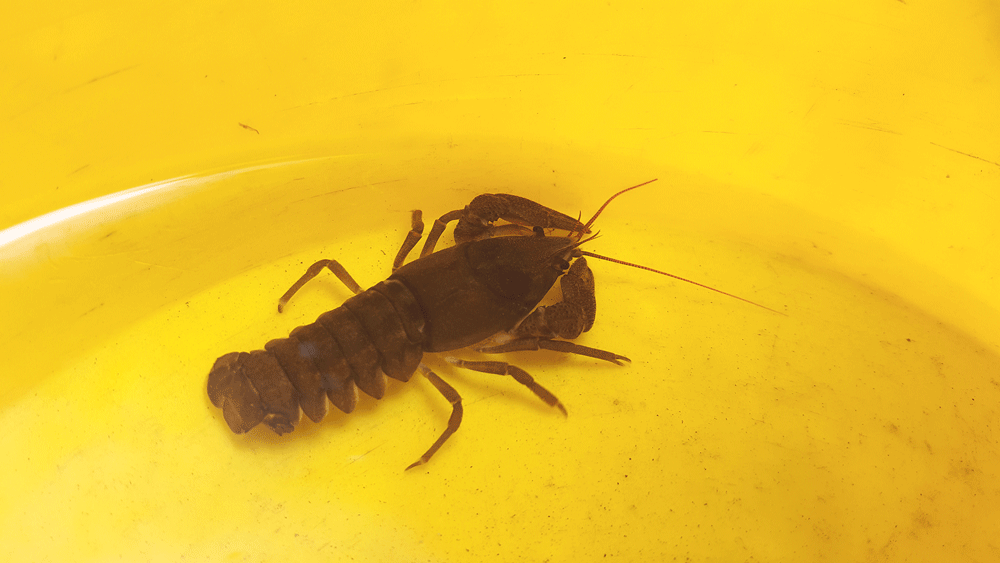
Crayfish plague has been detected in the River Camac
Crayfish plague reported in River Camac
It has been reported that a crayfish plague has been detected in the River Camac at Corkagh Park, with SDCC implementing several measures to contain the outbreak.
The crayfish plague is a water mould that infects crayfish, most notably the European Astacus, which dies within a few weeks of being infected.
The infection is not transferable to humans or pets.
SDCC has liaised with the lead authority, National Parks and Wildlife Service, alongside other relevant authorities in order to curtail the plague.
To raise awareness among the general public, information signage has been installed at Corkagh Park and along the river and local groups along the Camac have also been informed.
According to the SDCC, social media was used to further spread information, which “went out to as soon as we were informed by NPWS to inform the public of the disease and to inform them of the ‘Check, Clean, Dry’ message.”
Further signage relating these details is also being erected along the canal and the Griffeen.
The ‘Check, Clean, Dry’ message relates to the steps that should be taken by water users during the outbreak to help prevent further contamination.
The first step is to check clothing and footwear after leaving the water for mud, aquatic animals, or plant material which should be removed if found and left at the site.
A thorough clean of equipment using hot water or a high-pressure spray should be done prior to leaving the site, with particular emphasis on nets, waders, and areas that are damp and hard to inspect.
Finally, everything should be dried for as long as possible before use in other bodies of water as some invasive plants and animals can survive for over two weeks in damp conditions.
SDCC are continuing to liaise and work with NPWS to prevent the spread along with monitoring and testing of the River Camac and surrounding waters to identify the extent of the outbreak.
Funded by the Local Democracy Reporting Scheme

