
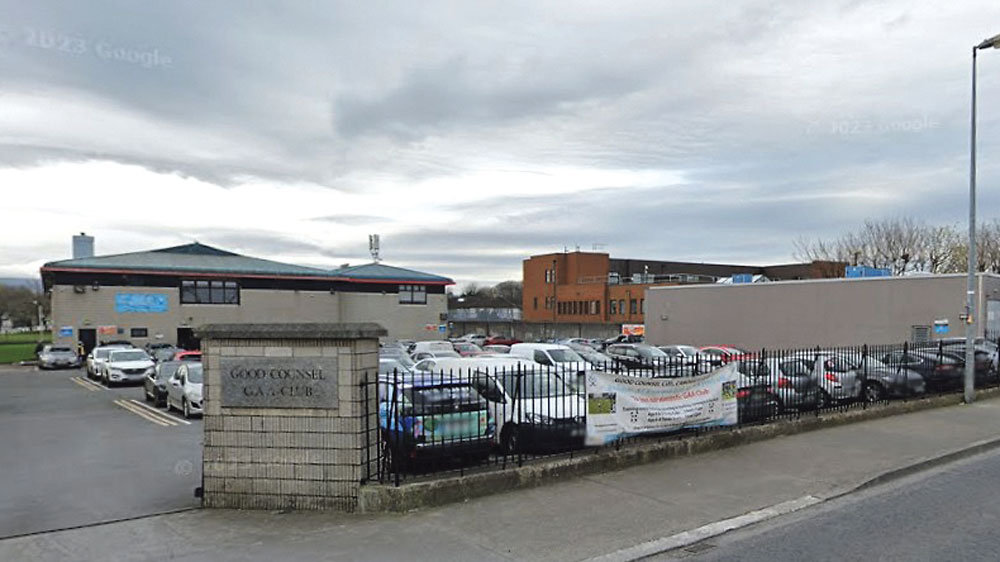
The mast on Davitt Road beside the GAA Club
Exemption to replace 21m high telecommunications mast at GAA Club
AN EXEMPTION from planning permission has been granted for the replacement of a 21-metre-high telecommunications mast with an identically-sized structure at a Drimnagh GAA club.
Applicant Independent Site Management Limited has been granted an exemption from planning permission for their plans to replace a 21-metre-high telecommunications mast and associated equipment, a new mast at a new location on the same property – the grounds of Good Counsel Liffey Gaels.
The new location for the new equal-height
structure is approximately four metres from the original structure’s place on the property.
The previously permitted stayed telecommunications mast structure, granted in October 2025, will make way for a monopole telecommunications structure at the grounds on the Davitt Road.
The proposed monopole structure has been designed to facilitate the continued operation and future sharing of telecommunications infrastructure by licensed mobile network operators as part of ongoing network development and infrastructure sharing arrangements.
All associated ground-based equipment cabinets and ancillary infrastructure shall remain within their existing approved locations.
The proposed development also includes the relocation of the previously permitted palisade fencing and access gate to facilitate the revised monopole arrangement and associated operational access requirements within the site.
The proposed change from a stayed mast configuration to a monopole structure is informed by recent operational experience within the wider telecommunications network, according to the application’s cover letter, such as the structural compromisation and failure of.
The applicant made note of that event and the Section 5 exemption granted in response to that by Dublin City Council’s Planning Authority.
The cover letter states: “While the structural failure referenced above did not occur at this site, it has informed a wider engineering review of mast typologies across the telecommunications network portfolio.
“This review identified that stayed mast structures may be more vulnerable to extreme wind events due to their reliance on external guy wires and anchoring systems.”

