
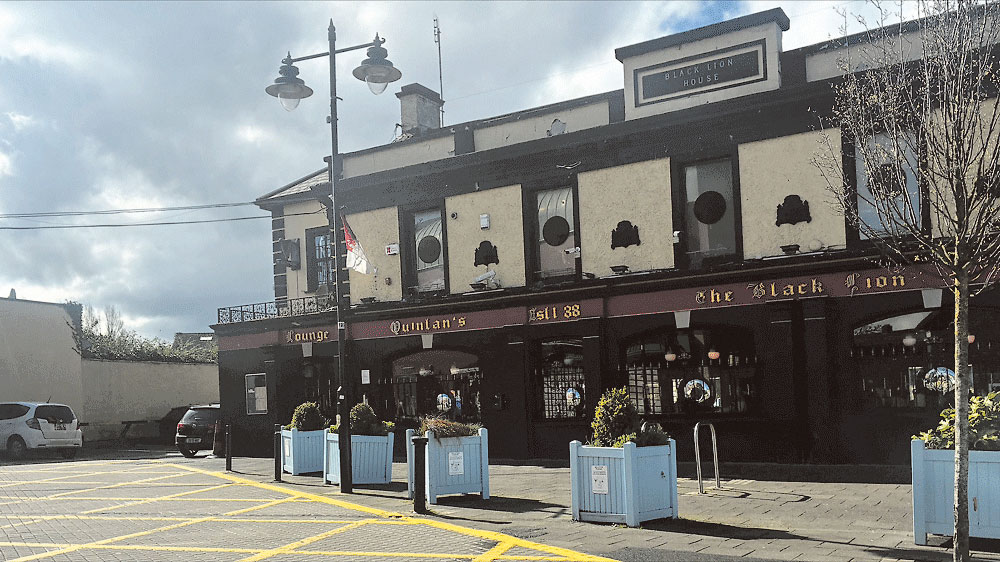
The Black Lion's beer garden pavilion in Clondalkin can host darts, pool and other pub games
Black Lion scores planning exemption for pub games
PLANS from The Black Lion pub in Clondalkin to introduce social pub games, including darts to their pavilion have been declared exempt by the council as it is not considered development.
The public house in Clondalkin Village has had their new plans declared exempt as it has been declared not to meet the definition of development laid out in relevant documents and does not constitute a change of use or carrying out of works, according to the Chief Executive’s Order.
The application had sought an exemption for the provision and playing of traditional and social pub games, including darts, pool, shuffleboard, table football and similar activities within the permitted 203 sqm beer garden pavilion at the pub on Orchard Lane.
Applicant Greenwin Ltd had previously failed to get permission to allow live music at the beer garden.
No change was proposed to the established public house/restaurant use, the permitted use of the pavilion as a beer garden, the approved operating hours or the physical structure of the pavilion.
The beer garden is situated to the rear of The Black Lion Public House and forms part of the overall public house and restaurant premises.
A cover letter from agent Frank Ennis and Associates claimed that the plans will not interfere with conditions two, three and four of the structure’s granted planning permission, including one on noise limits.
However, the council’s decision did note that no noise impact assessment was provided and that it “could be enforced against” on this basis, regardless of the Section 5 exemption.
However, condition two’s insistence that the pavilion be used as a beer garden was seen favourably by the council in this case, complements the public house use and “as such, it is considered that in this particular case, the proposal does not involve the carrying out of works and does not constitute a material change of use and is, therefore, not development.
“As the proposal does not constitute development, the question of exempted development does not arise.”

