
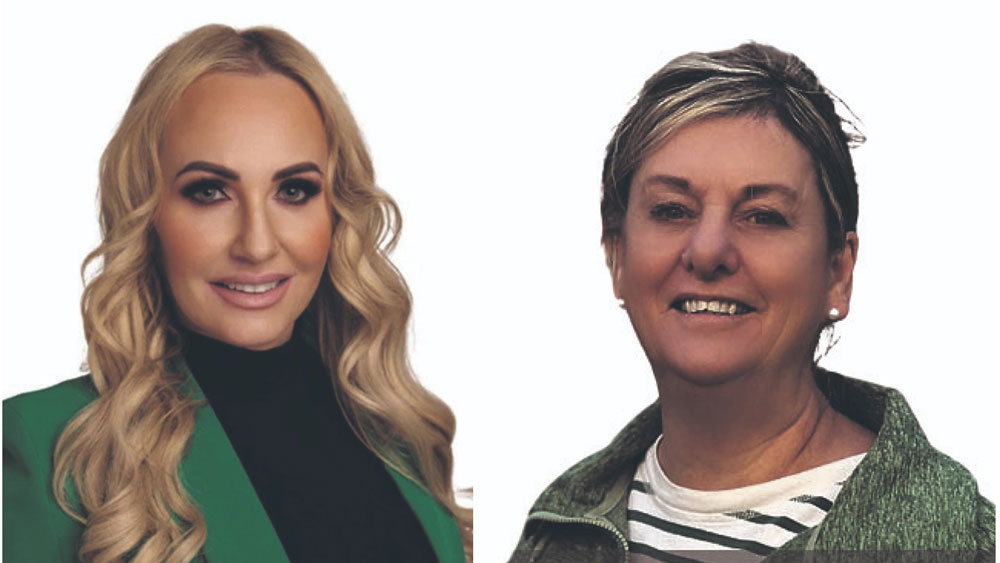
Left: Senator Teresa Costello and TD Máire Devine
Female politicians speak out on online abuse
“I think we need to go back to when I was raised when we were told ‘if you don’t have something nice to say, don’t say anything at all’” was reiterated by several female politicians when discussing the issue of gender-based abuse that has been hounding that cohort recently.
The Echo contacted a number of local female politicians regarding a recently published report into gender-based violence against female politicians in Ireland.
This report, which was based on the findings of an anonymous survey carried out by Women for Election, showed that; “96 per cent of female Oireachtas members experienced online abuse.”
Twenty-four members of the Oireachtas – 34 per cent of all female TDs and Senators – responded to this survey, which revealed a troubling yet “unsurprising” pattern of online psychological, sexual and physical violence.
In turn, this has resulted in two-thirds of female politicians making the decision to change their social media behaviour in one way or another.
A group of female politicians shared with The Echo, their lived experience of online and in-person abuse, with many of their stories echoing one another and a shared agreement that the 96 per cent statistic reflects “the reality for many women in public life.”
Social media companies have a responsibility to moderate their websites to ensure abuse, harassment and threats of violence are removed, but many of the politicians interviewed reiterated the failure to do so.
Many of them regularly receive abusive comments on their social media pages that are not removed by moderators, but by the individual on the receiving end.
Regarding the nature of the abuse, many politicians have experienced hateful comments on their social media posts, regardless of the subject matter.
Senator Teresa Costello, a Tallaght native, told The Echo;
“I could be announcing good news, it could be something really positive, and there’d be abusive comments.
“I have had comments on my appearance and I have had comments on my accent, because I’m from Tallaght, but my appearance or my voice doesn’t determine my ability to perform in politics, and it doesn’t determine how hard-working I am.”
Comments on a woman’s appearance is the most common insult that is thrown at female politicians, Councillor Niamh Whelan pointed out.
“Being a woman, they always seem to straight away target your appearance. They would never target a male colleague’s appearance, it’s always when it’s a woman.”
Insults such as these are “water off a duck’s back” for Cllr Whelan, but patronising remarks with misogynistic undertones do strike home, as they are a reminder of bygone times, when female politicians “hadn’t a clue” about politics.
Due to the consistent level of abuse that is left under social media posts, many politicians have changed their online habits, such as deleting certain accounts and turning off comments under posts.
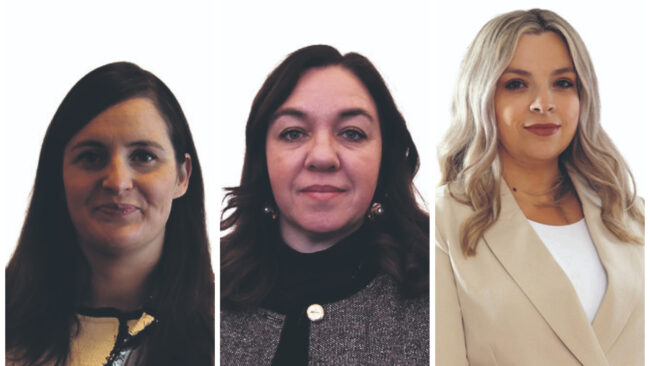
(Left to right: Minister Catherine Ardagh, TD Jen Cummins and Cllr Niamh Whelan
There are divided opinions amongst politicians on the correct way to deal with online “trolls” as some see the removal of accounts or comment sections as giving in to those users.
Minister Catherine Ardagh TD encouraged her fellow politicians to hold firm against the keyboard warriors, saying:
“We cannot allow online trolls to succeed in driving women out of public life or discouraging them from speaking up. If women are silenced, our democracy is poorer for it.”
“One of the great strengths of Irish politics has always been that elected representatives are accessible to the people they represent. It would be terrible to see that eroded.”
It was agreed by multiple politicians that any threats to incite violence or expose details of a politician’s personal life online, should be dealt with by the law to ensure it does not escalate into a dangerous situation.
For some, the decision to leave their social media pages completely open is not easy, as many of her colleagues have experienced a domino effect of online abuse, with one negative comment under a social media post suddenly attracting a flurry more.
In recent years, there has been an obvious increase in the amount of gender-based abuse experienced by politicians, with some citing the growing issue of the “manosphere” as a reason behind women gaining spiteful comments now more than ever.
“I think the tone has become more hostile and venomous, particularly towards women. Public representatives have also closed constituency offices or are increasing security because of threats and intimidation” Minister Catherine Ardagh said.
Jen Cummins TD explained how certain views that she holds contribute to the amount of online abuse she receives, with her progressive views on trans rights making her a direct target for hateful comments.
A common opinion held by many female politicians is the need for their male colleagues to stand up and “call people out” on the treatment of women in political positions.
Sinn Féin spokesperson on Equality, Domestic and Gender Based Violence, Máire Devine TD called on her male colleagues to show solidarity for women in politics, as well as addressing the overall issue of gender-based violence in Ireland.
“Where are you when we’re trying to shout about it? It’s not just the abuse but violence that women are experiencing across societies. Where are you marching for it? We want your voice” she said.
“All we get is reports of the explosion of gender-based violence. So, why would female politicians be any different?”
Deputy Devine emphasised the need for greater political involvement to tackle the issue of violence against women, instead of it remaining “a women’s issue” that is only referred to in speeches on International Women’s Day, for example.
“Let the men stand up and make those statements on International Women’s Day, because the violence is not our problem, but by us constantly addressing it, it remains a women’s issue.
“Why don’t we let them stand up in the chamber on International Women’s Day, or whenever they get that opportunity, and let them lead the discussion and talk about it.”
Another factor that has influenced the treatment of female politicians is the increase in misinformation that circulates on online platforms and has polluted algorithms.
Senator Teresa Costello spoke on this, as well as the issue of “doomscrolling” online that many of us find ourselves doing every day.
Senator Costello made the point that whether we realise it or not, consuming negative news on a constant basis has an impact on our mental health, as well as our outlook on the world.
“I think a lot of the hatred is struck up by misinformation and fake news and we’re absorbing an awful lot of negativity online, there’s a lot happening in the world, and even though people may think they’re not affected by it, I do believe people are absorbing an awful lot of it.”
Minister Ardagh encouraged women in public-facing roles to speak up and not to allow abuse to silence them, no matter how strong it may be,
“The intention is often to intimidate people into staying quiet, and it can have a chilling effect. Every public representative was elected to give a voice to their community.
“We should continue to speak up, continue to represent the people who elected us, and never allow intimidation to silence those voices” she said.
Funded by the Local Democracy Reporting Scheme

